
Overview
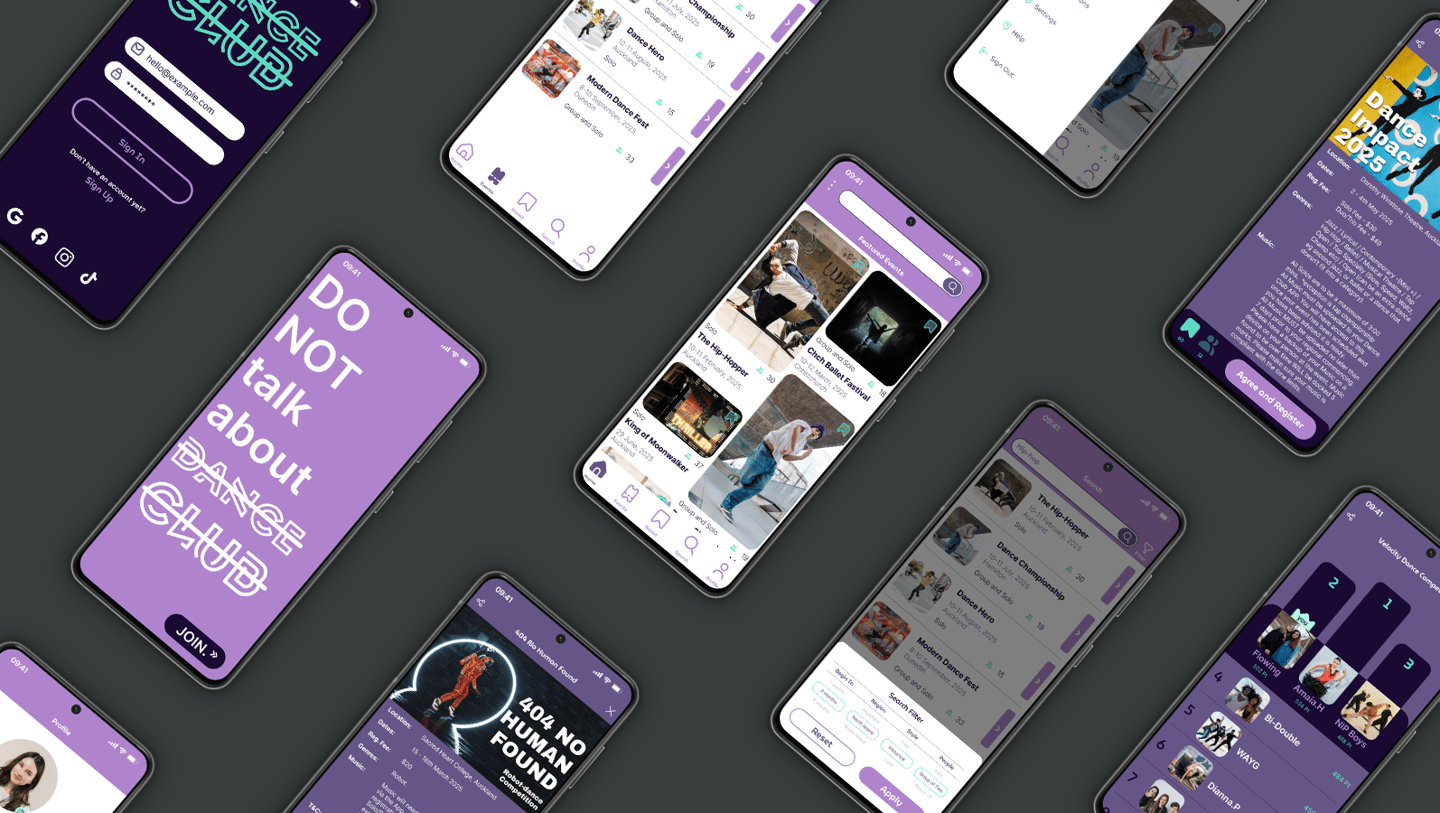
Dance Club is a comprehensive mobile app platform designed to simplify the dance competition experience for participants, providing effortless registration, streamlined management of details like categories and music uploads, and real-time updates to keep users informed and stress-free throughout the process.
My Role
Platform
UX Designer
UX Researcher
Mobile App
Duration
6 Weeks
Tools
Figma, Miro
Highlights
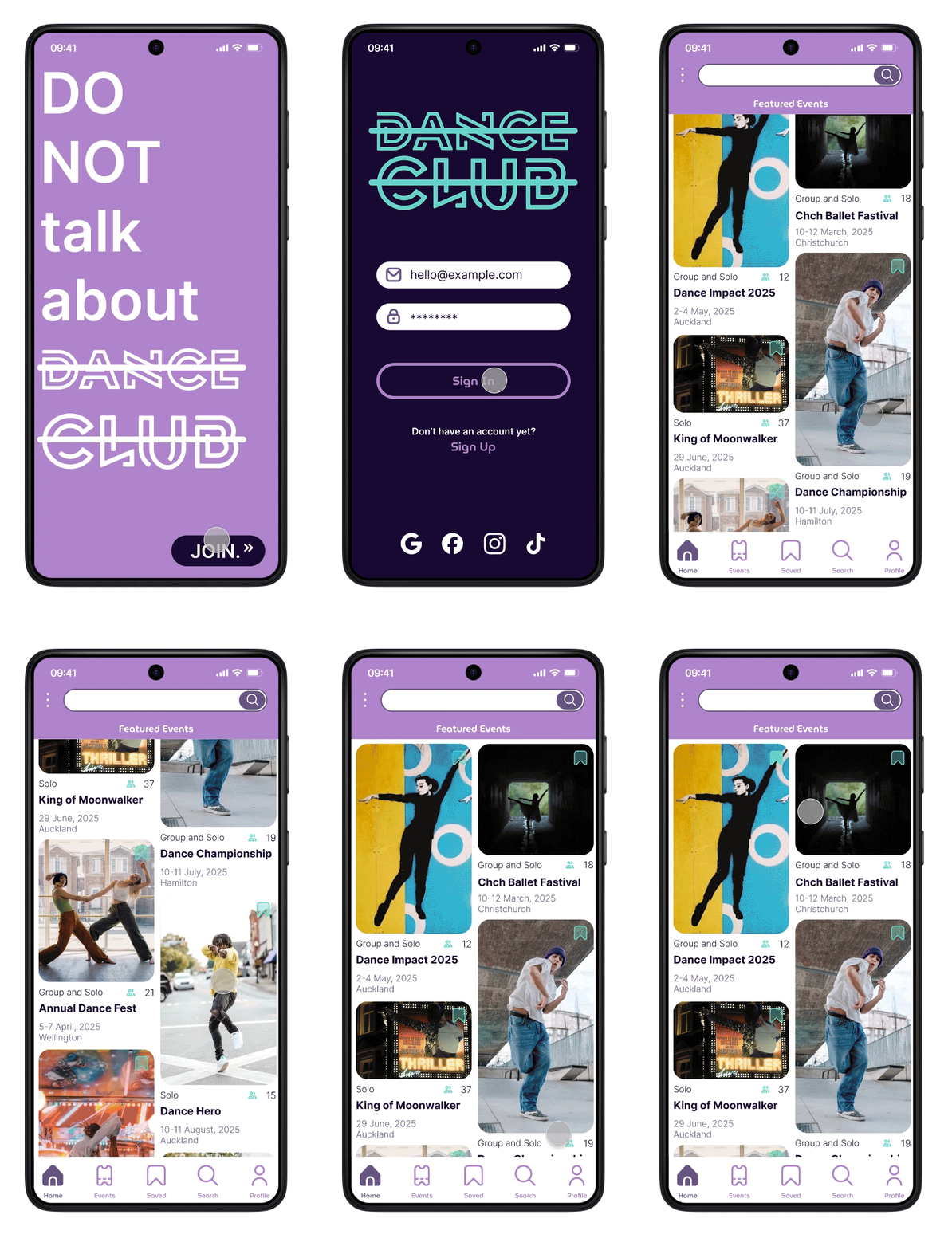
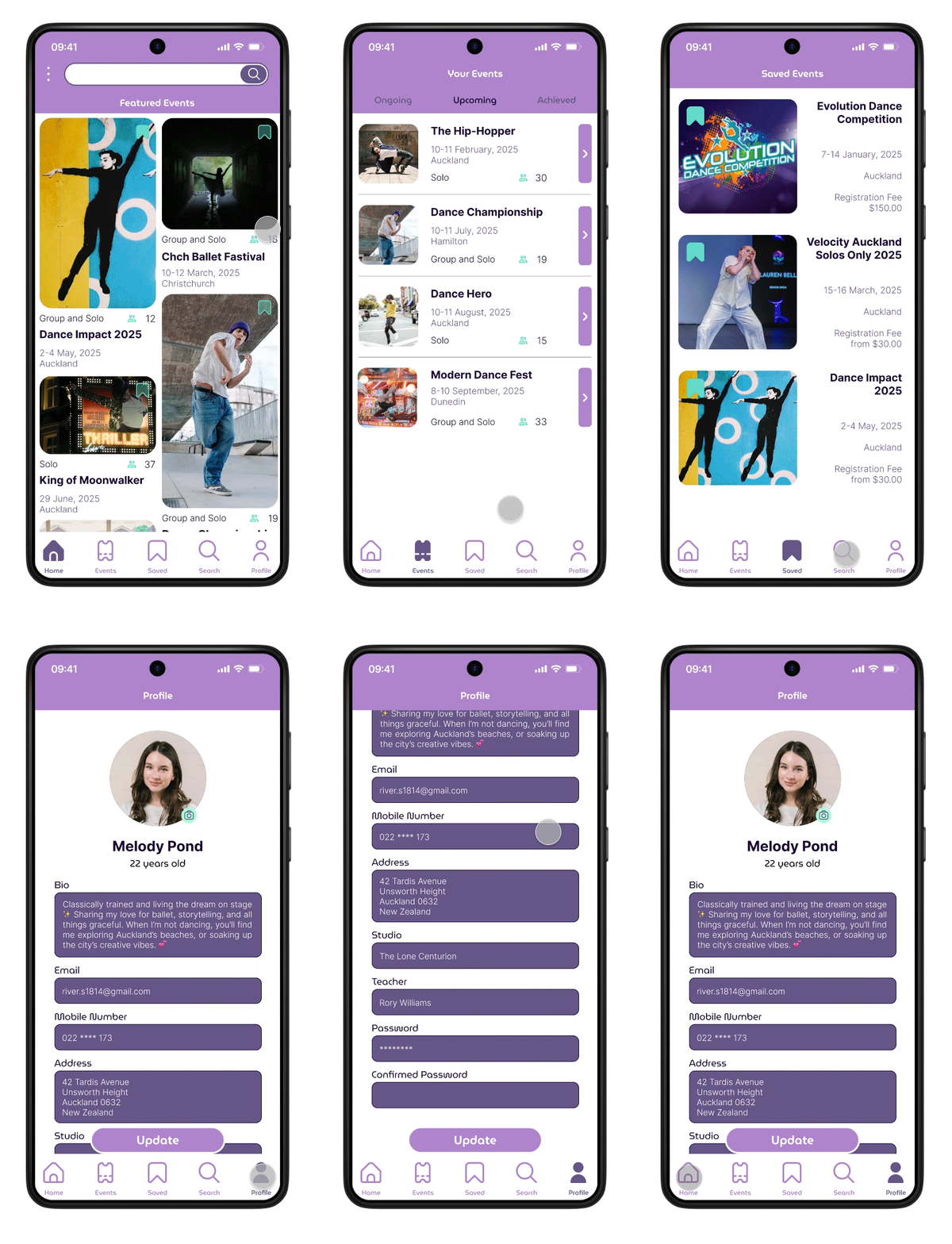
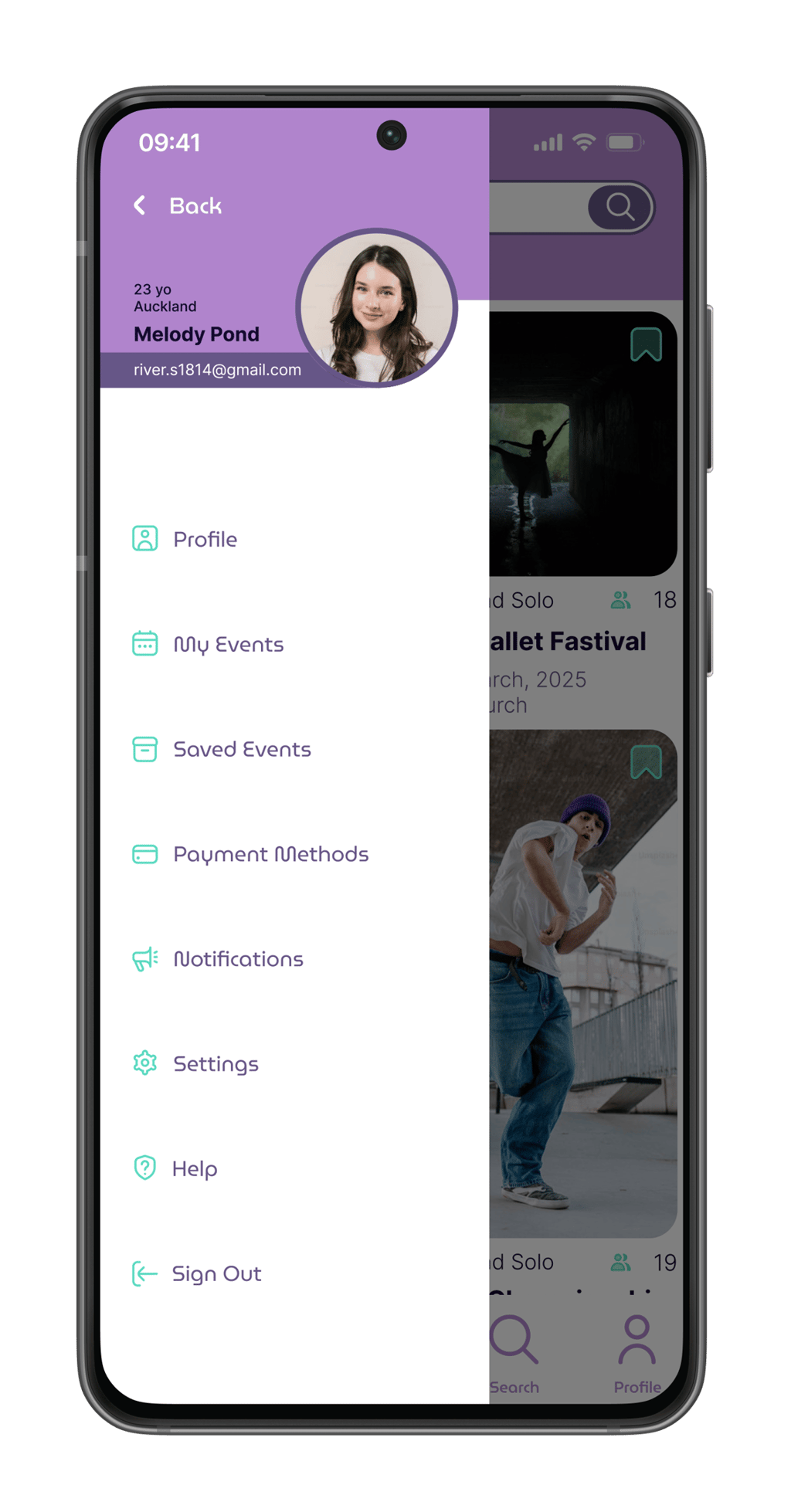
When first launching the app, the user would see the current featured events—scrolling to see more of the events and also keep the focus point at the tab.
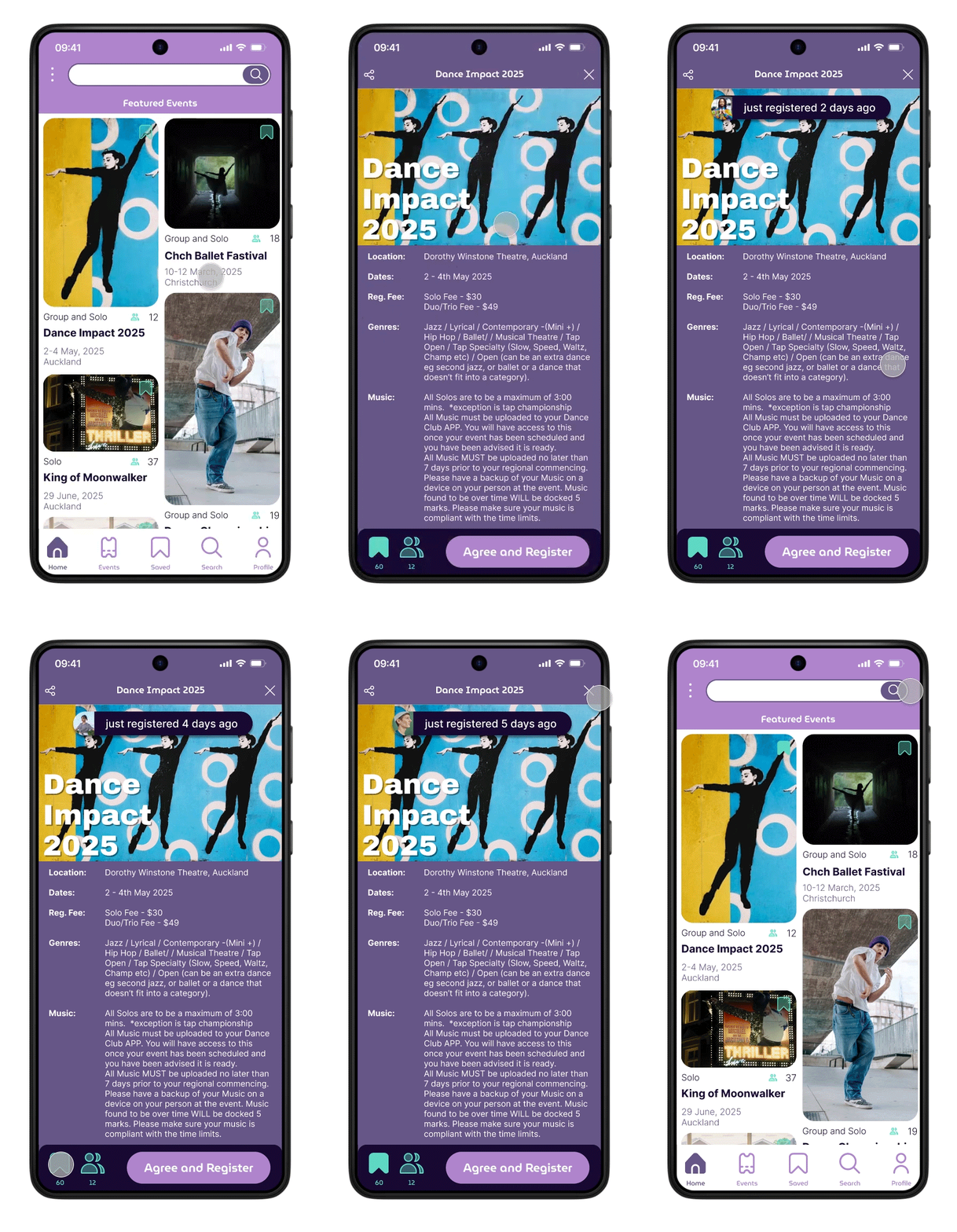
Expand to more info
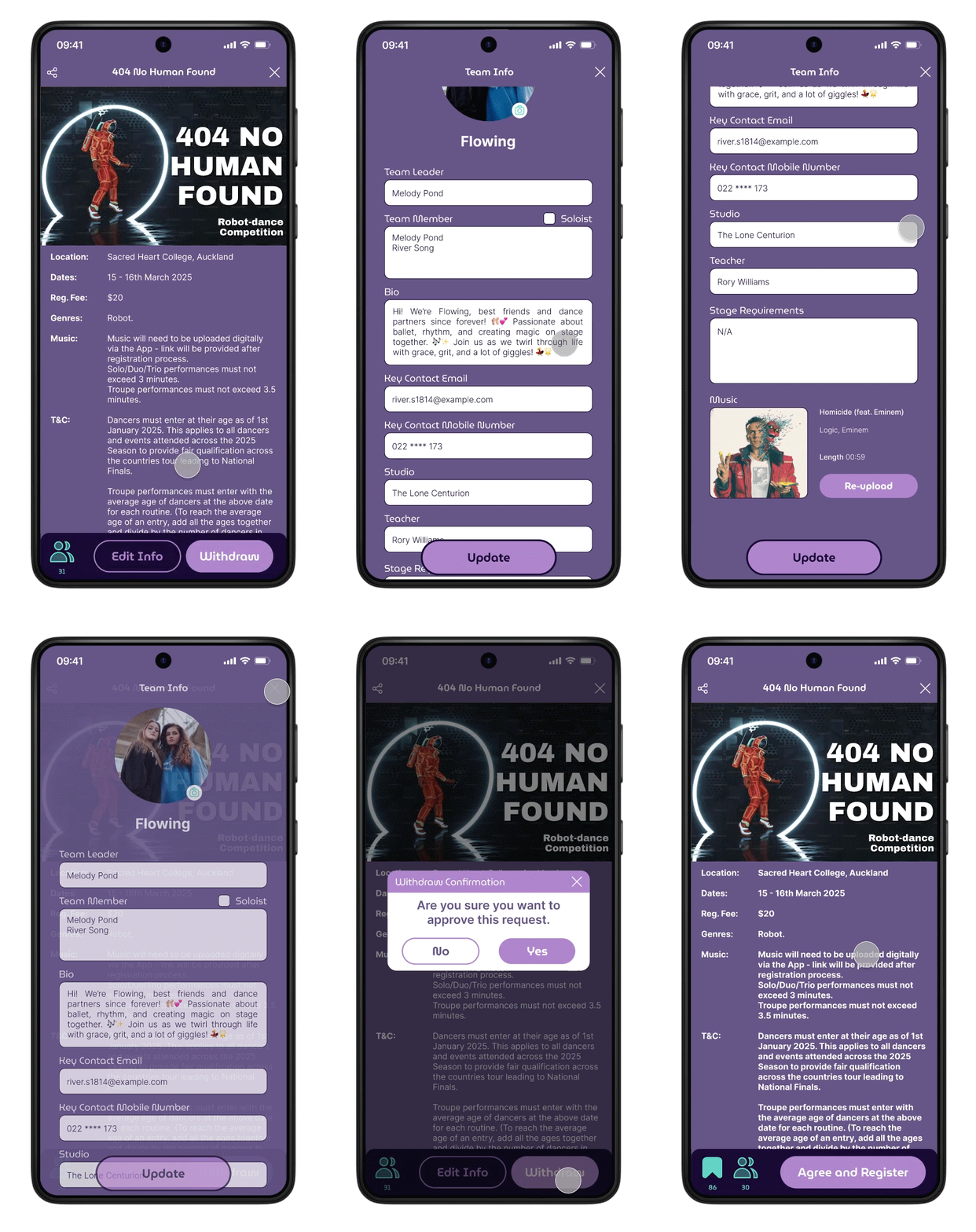
Effortless Registration
Easy to Navigate
Once users are interested in one of the events, they can click to expand the card to view more info or save it straightforward for later. The number of saves/participants and other competition-spec information will appear to help the users to know better about the program. The registered news would float on the top section to encourage registration.
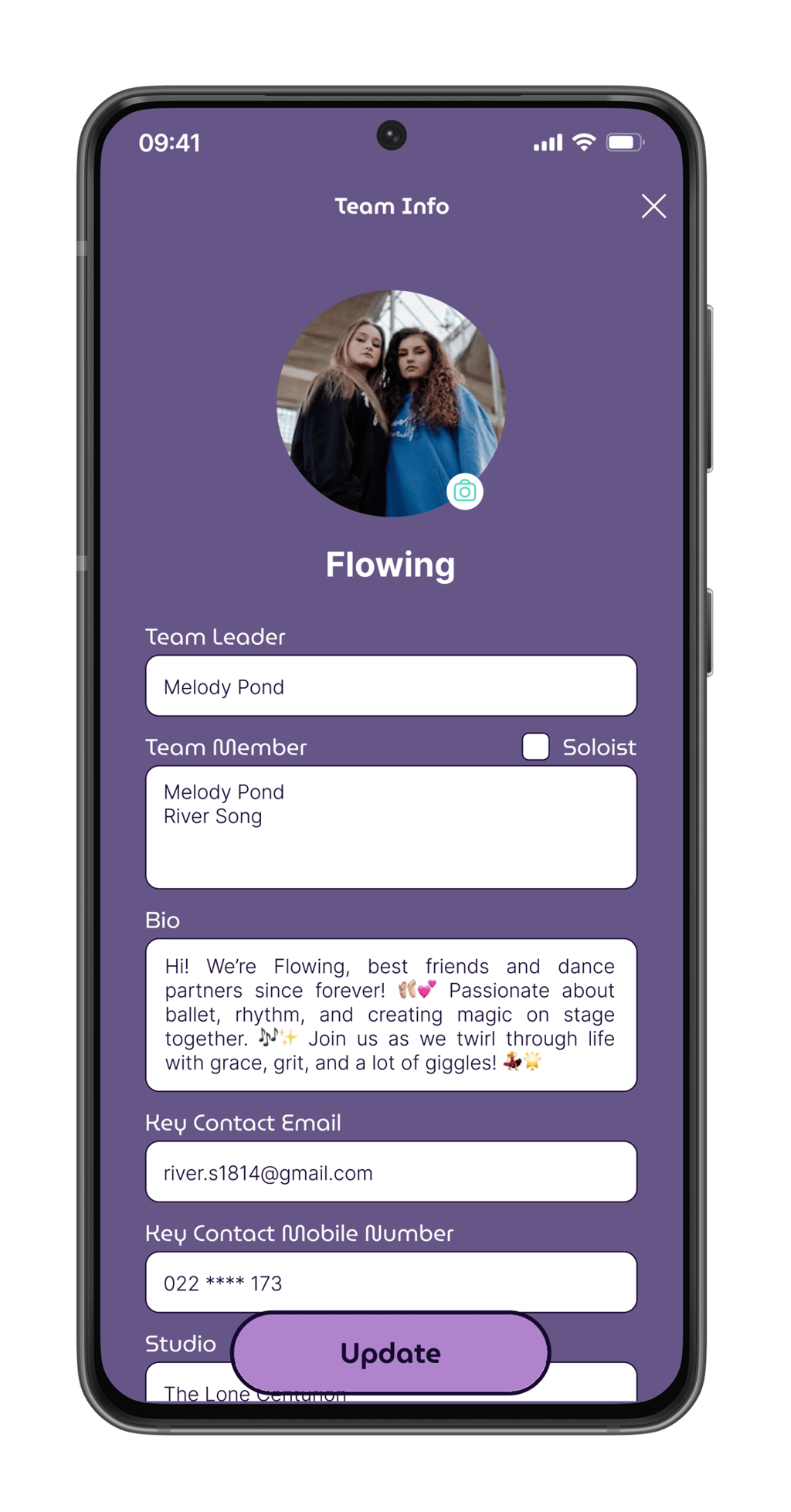
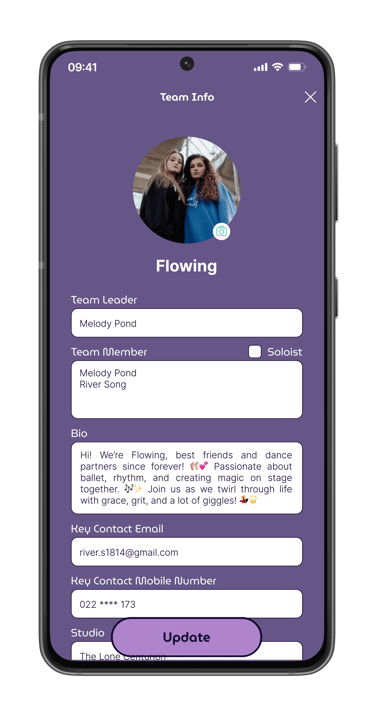
Simplifies the process with a user-friendly interface for entering participant details and completing registrations. Allows easy uploading and confirmation of performance music and other required documents. As well as, a simple info editing process if changed mind.
Many dancers are focused on their performances and prefer minimal time spent on logistics. Competitions require manual or fragmented registration systems (e.g., forms, emails, or separate payment portals). This leads to confusion and missed deadlines. Overloading the app with features can make it overwhelming.
Competitors often struggle to keep track of performance times, stage locations, and warm-up schedules, especially when events are large and chaotic. Event delays or updates are common, but dancers often don’t receive timely notifications, causing stress and missed performances.
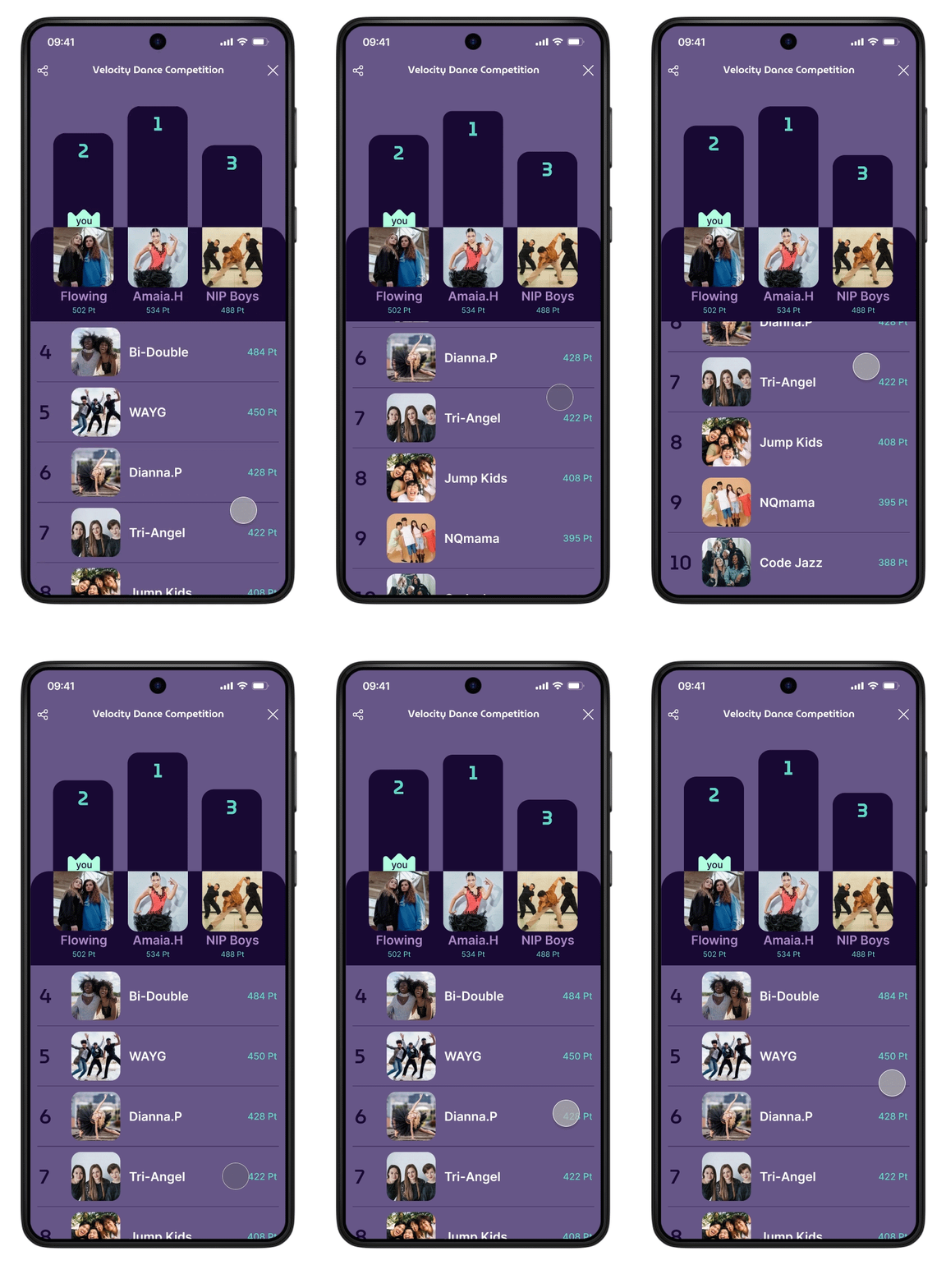
Competitors usually wish to track their progress over multiple events but lack a centralized place to view past performance or scores.
Executive Summary
Goal:
Solution:
Balancing the diverse and real-time needs of dancers while ensuring a streamlined, user-friendly experience that builds trust and engagement.
Prioritize core functionality, such as registration, schedule management, and performance tracking, and keep the interface intuitive. Implement a robust backend system to support real-time notifications and updates. Focus on clear onboarding, secure payment methods, and features that foster a sense of community (e.g., social sharing or event photos).
Challenge
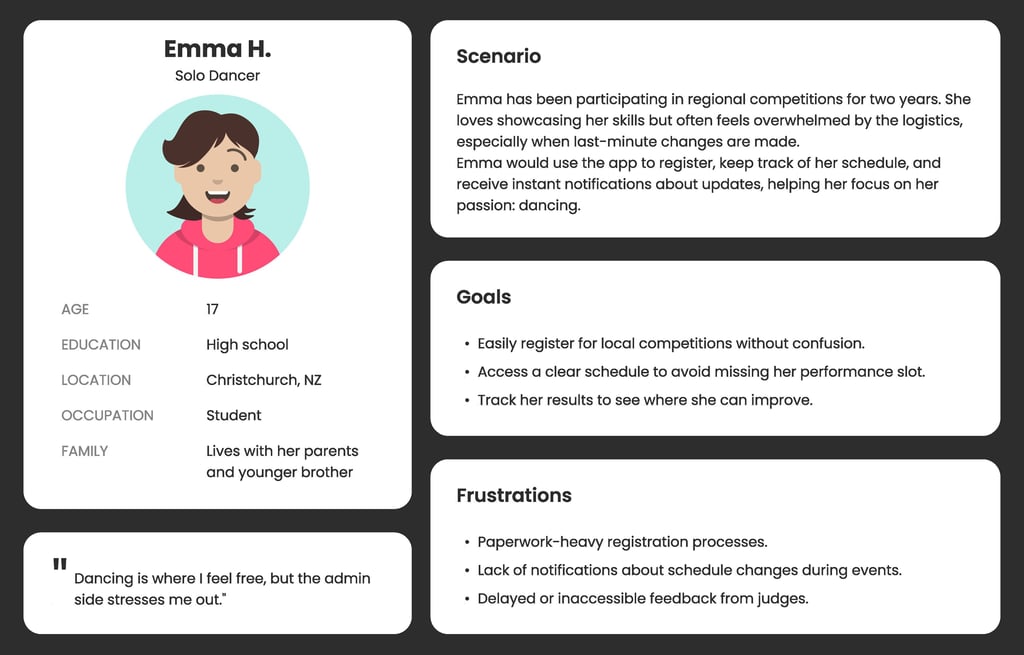
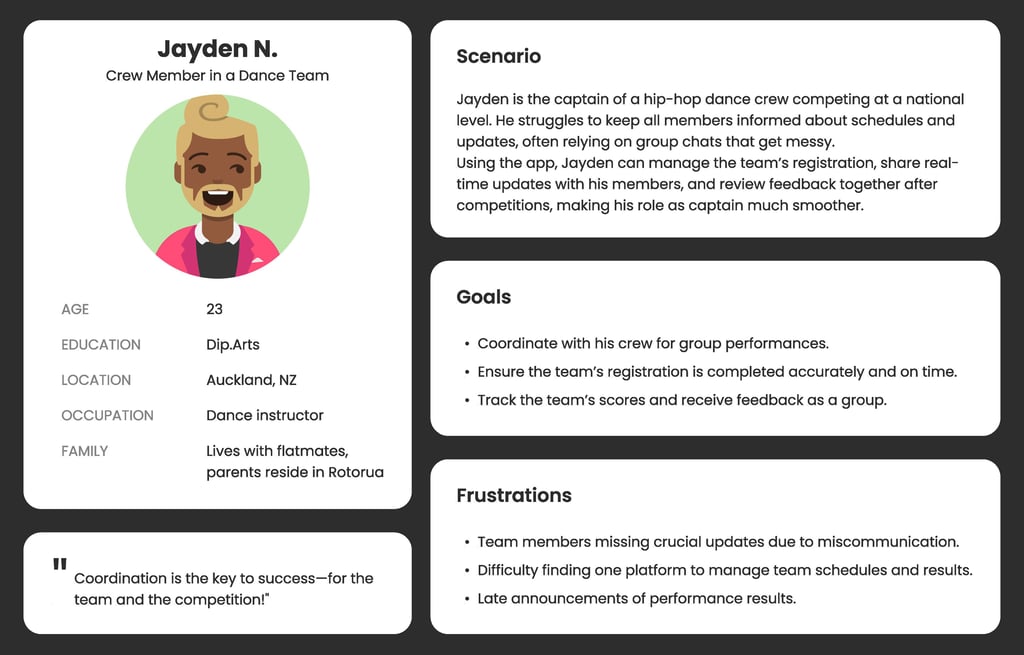
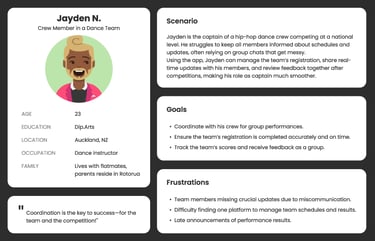
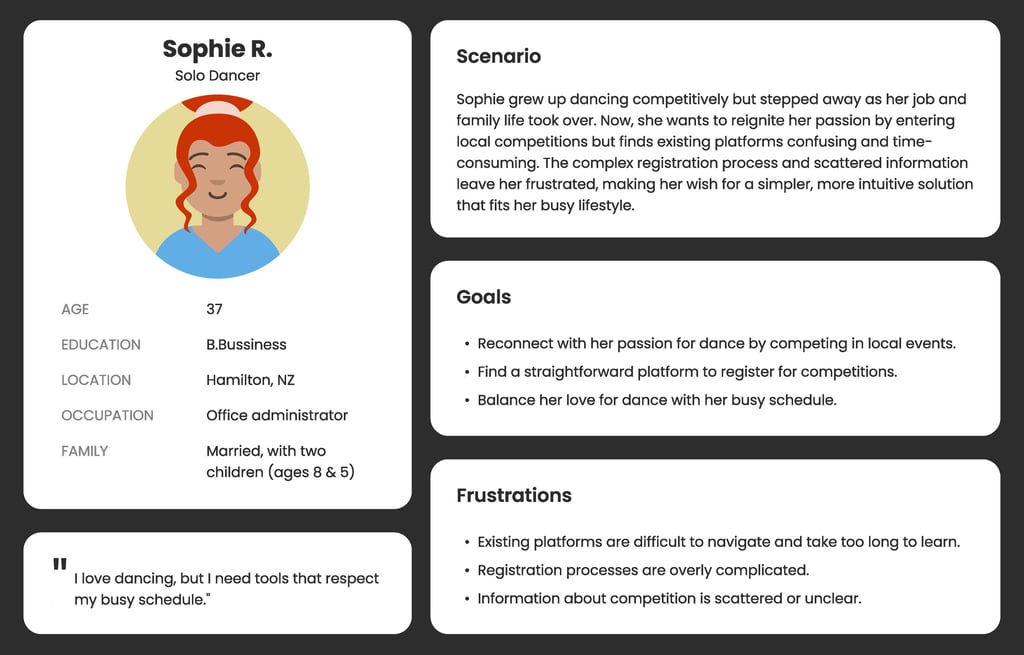
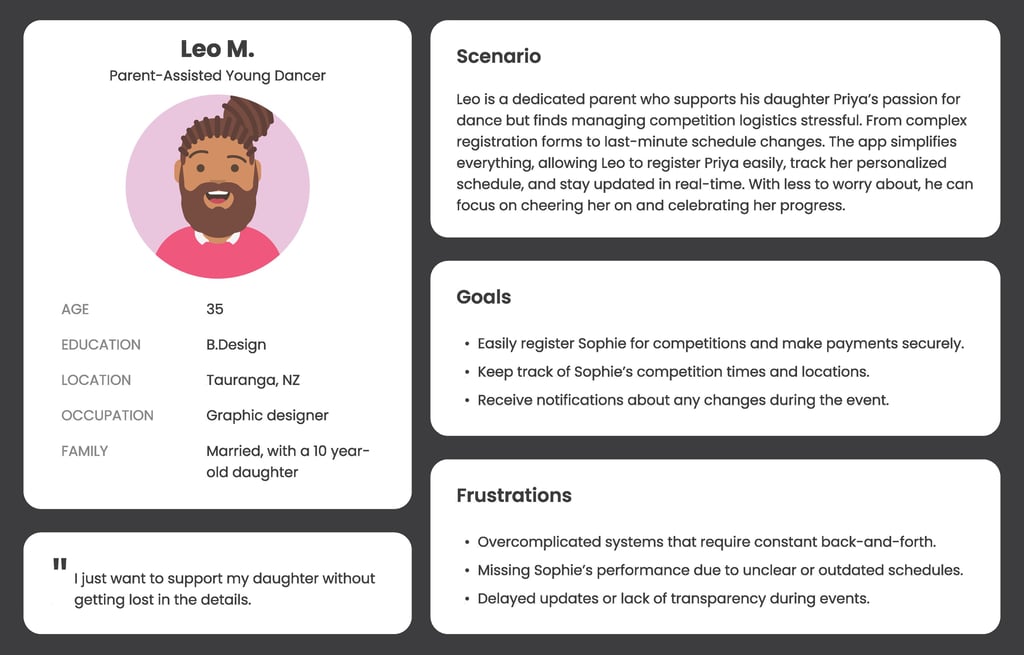
Target Users: Solo dancers and dance crews (both amateur and professional), as they form the core user base. Secondary users, like parents and coaches, can be considered for additional features later to broaden the app's appeal.
Users
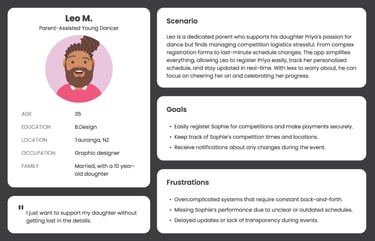
UX Research
Research indicates that existing dance competition platforms often suffer from usability issues, leading to frustration among users. A study focusing on artists' interaction with motion capture technology found that usability problems hinder the adoption of such technologies in the performing arts, suggesting a broader challenge in integrating user-friendly digital tools in dance contexts.
Additionally, common challenges in event registration systems include technical glitches, complicated registration forms, and poor user experience, all of which can deter potential participants.
These findings highlight the need for more intuitive and efficient platforms to enhance user engagement in dance competitions.
Identifying the problem
Competitive analysis



The world of dance competitions has grown significantly over the years, yet the technology supporting competitors remains fragmented and underdeveloped. In New Zealand and beyond, existing dance competition platform apps often fail to meet the needs of their users, leaving room for innovation.
The market for dance competition apps features a mix of local and global players. In New Zealand, platforms such as Dance Comps NZ (Glide App), Judge HQ, and Eventfinda cater to different aspects of the dance competition process. Other apps like National Dance Challenge (NDC) cater to specific competitions, offering limited features.
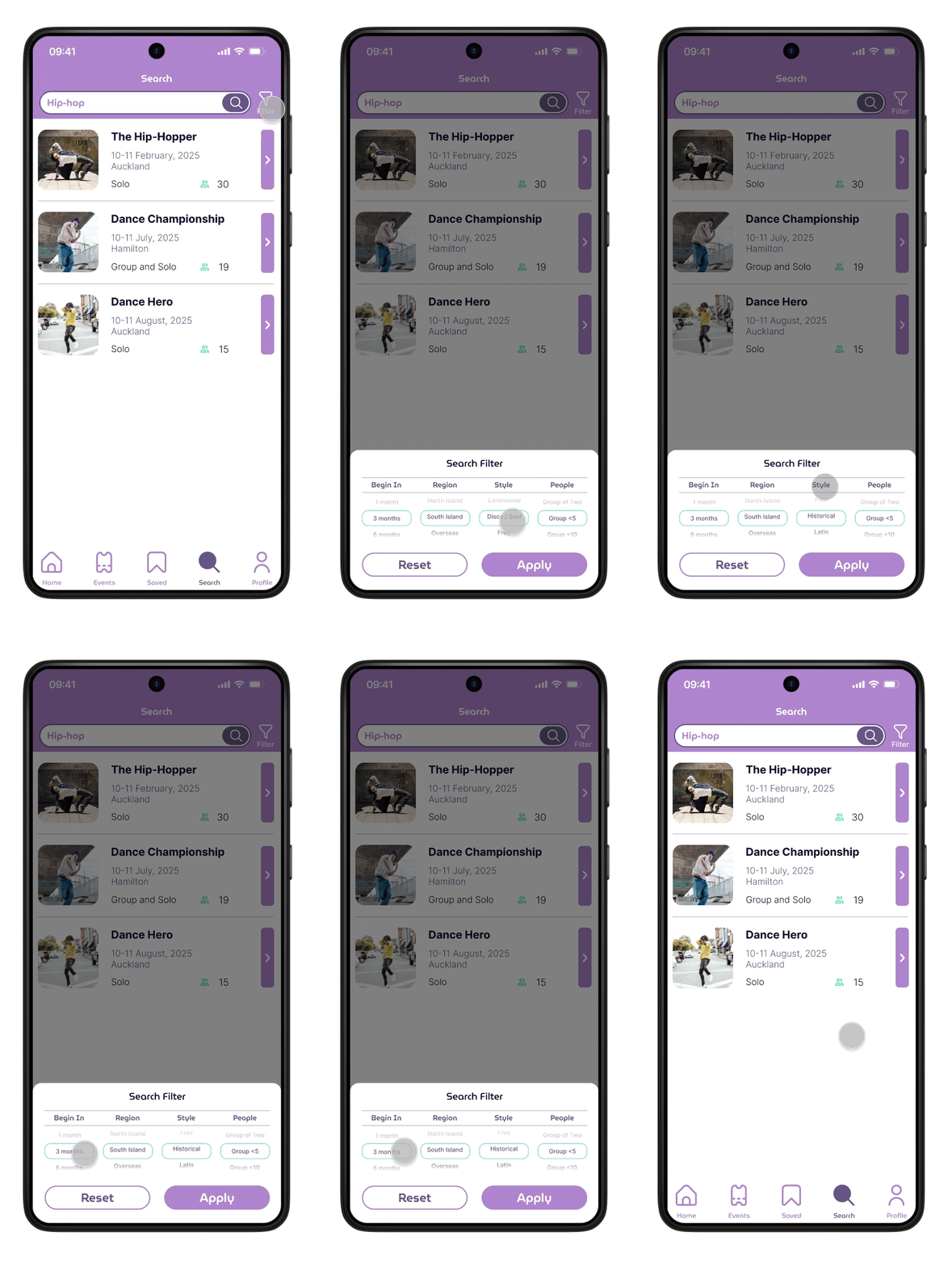
Most platforms offer basic registration tools, though they are often clunky and time-consuming. They provide event schedules, but these are typically static and lack real-time updates. Apps like Judge HQ make it easier to find competitions, though filtering options and personalization are minimal. Furthermore, only a few platforms offer score or feedback tracking features, and when they do, they are often underdeveloped.
Define
Ideation
Storyboard
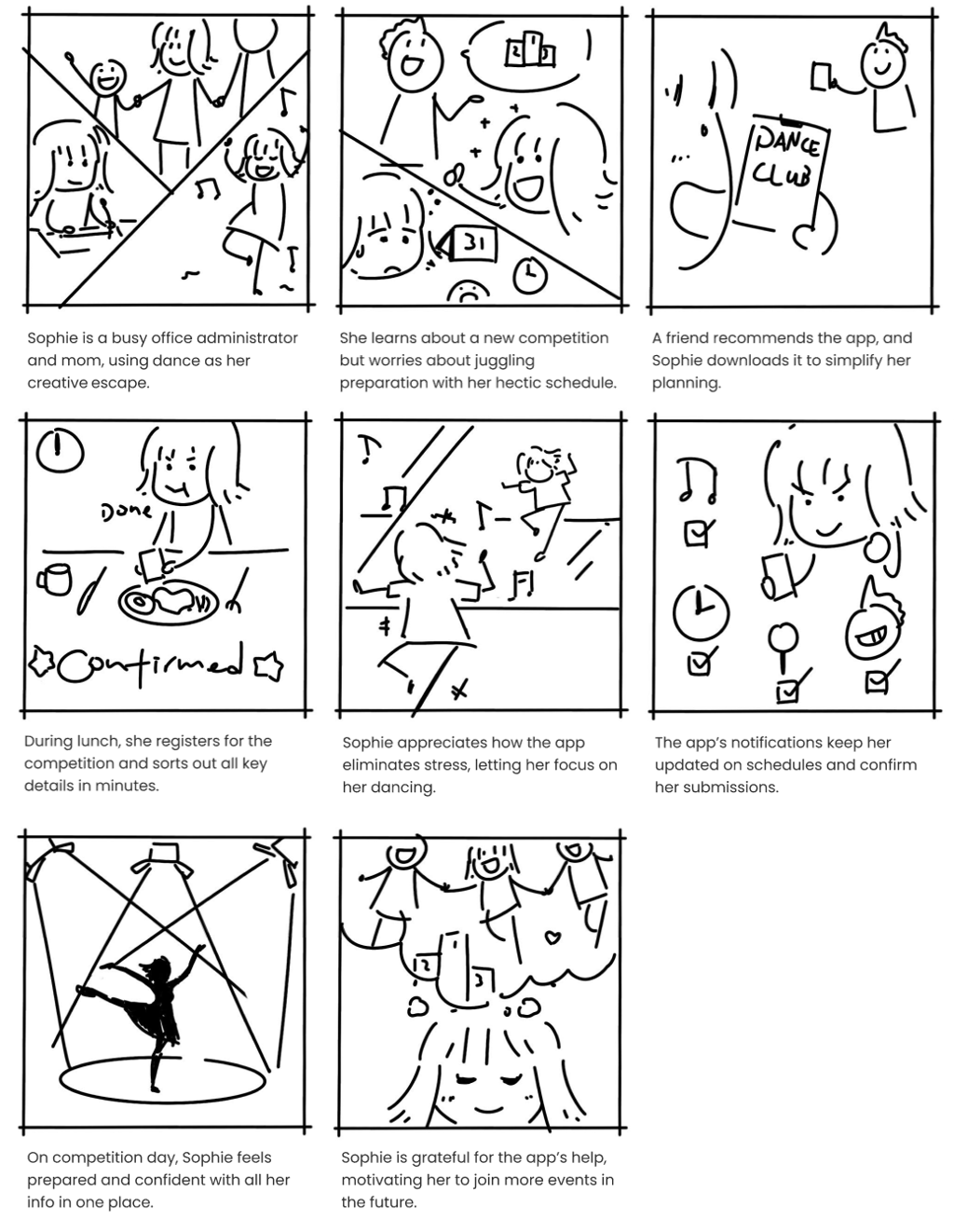
While the current ecosystem of dance competition apps provides basic functionality, it falls short in delivering a seamless and comprehensive experience for competitors. By addressing these gaps—especially in user experience, personalization, and real-time updates—a new platform has the potential to revolutionize how dancers engage with competitions. The market is ripe for innovation, and a user-focused solution could redefine the industry, empowering dancers to focus on their passion rather than the logistics.
Crazy 8s + HMW
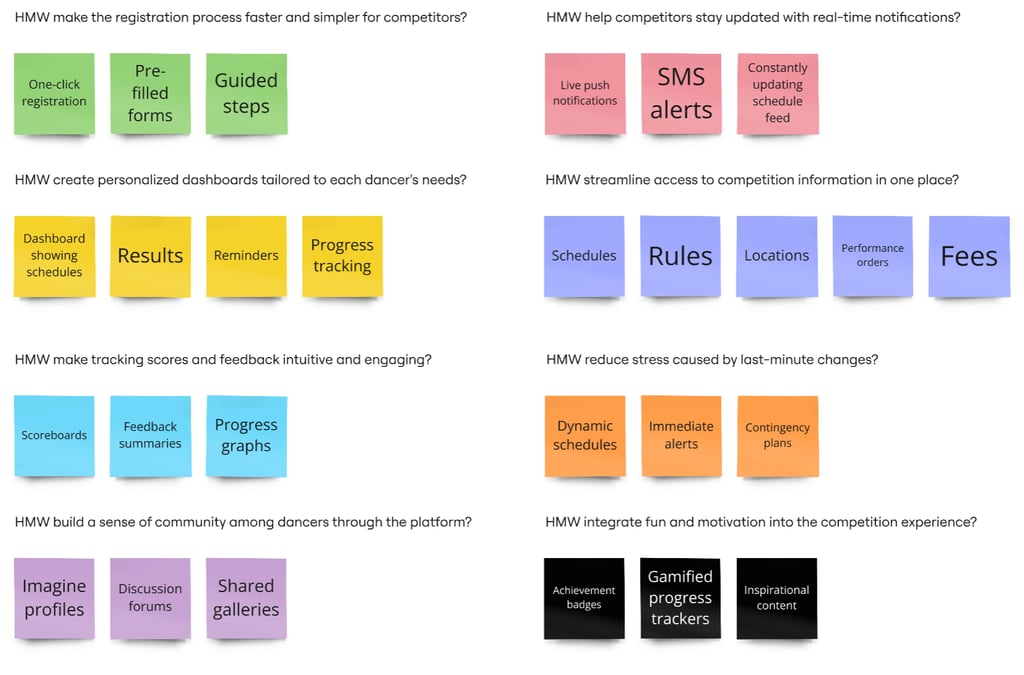
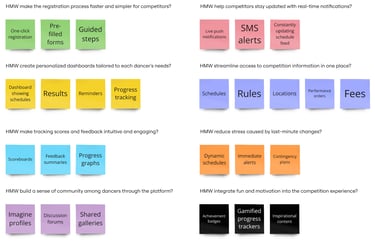
For each HMW statement, dedicate a segment of the Crazy 8s sketch to brainstorm one solution idea. Focus on speed and quantity to unlock creativity and generating a variety of potential solutions.
Mind Mapping
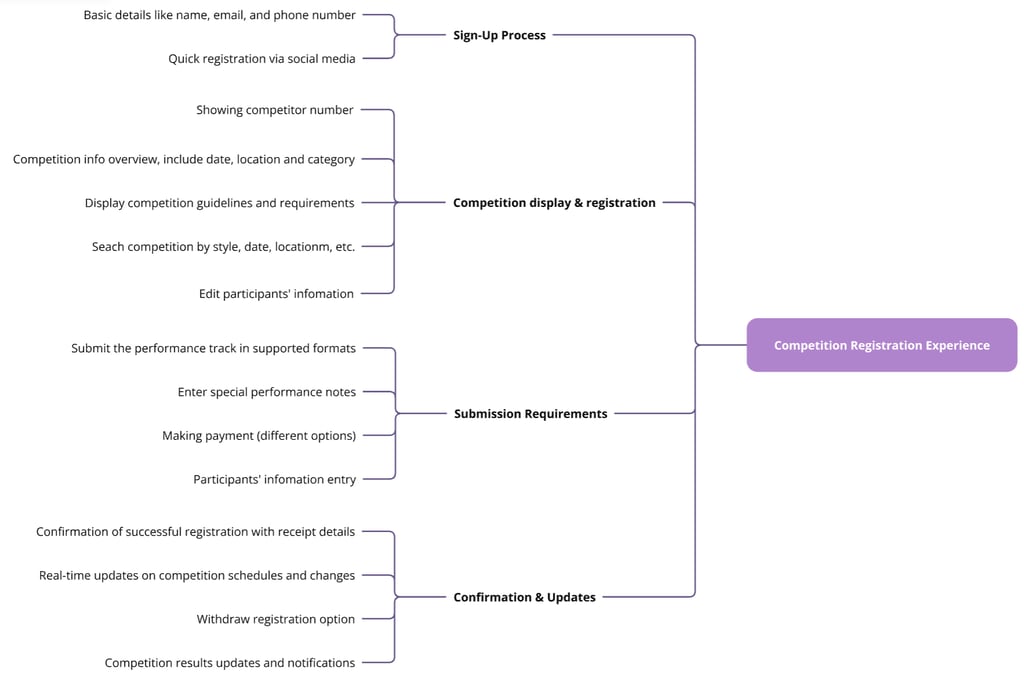


DESIGN
Key features
Simplified participant registration with easy form filling, category selection, and profile creation.


effortless registration
stage requirements
real-Time notifications
event dashboard






A seamless upload feature for performance music and other requirements, with instant confirmation and error handling.
Instant updates on schedules, group assignments, and changes, ensuring participants stay informed.
A centralized hub displaying competition details, performance times, venue maps, and personal schedules for quick access.
Wireframes
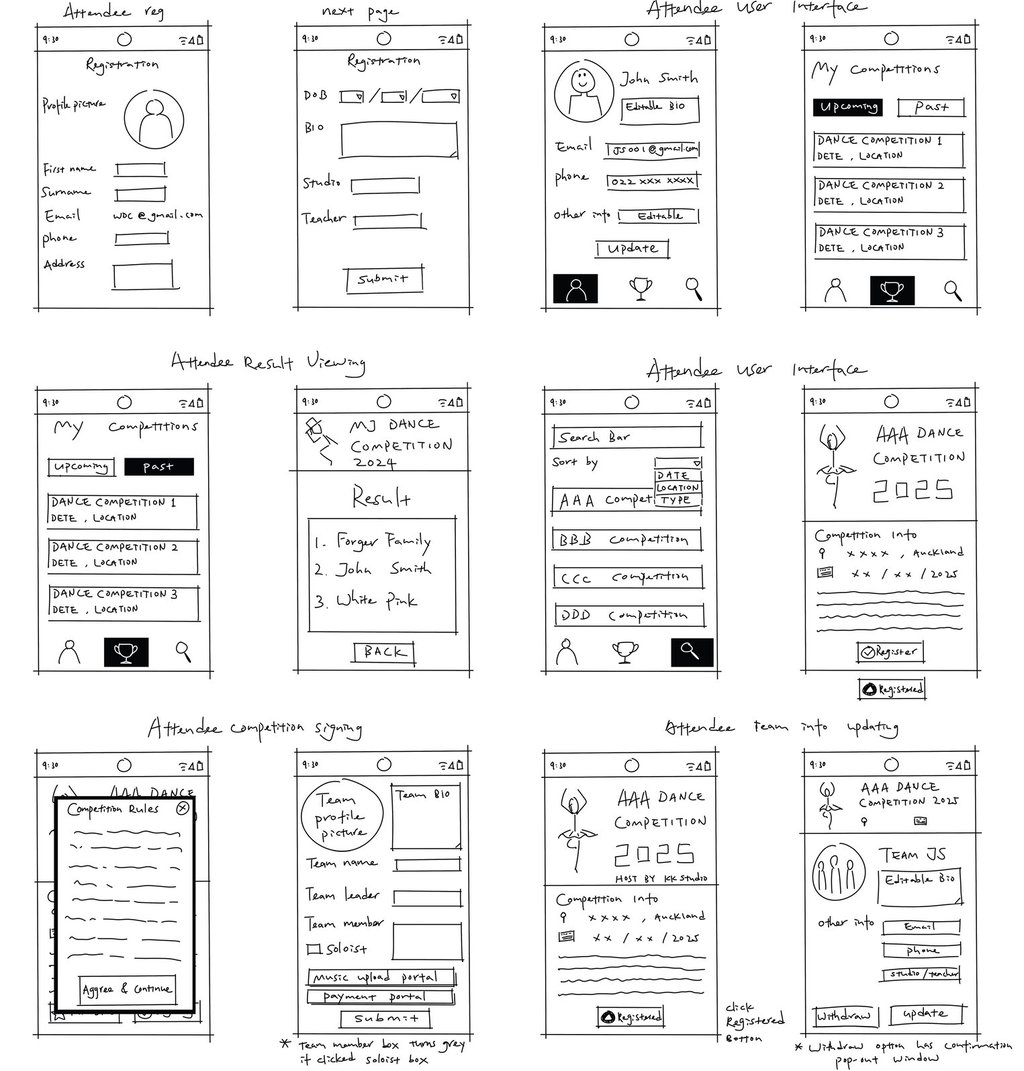
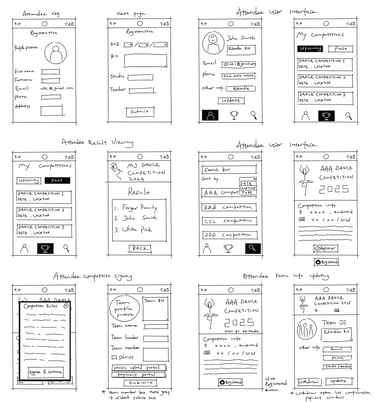
Lo-fi Prototype
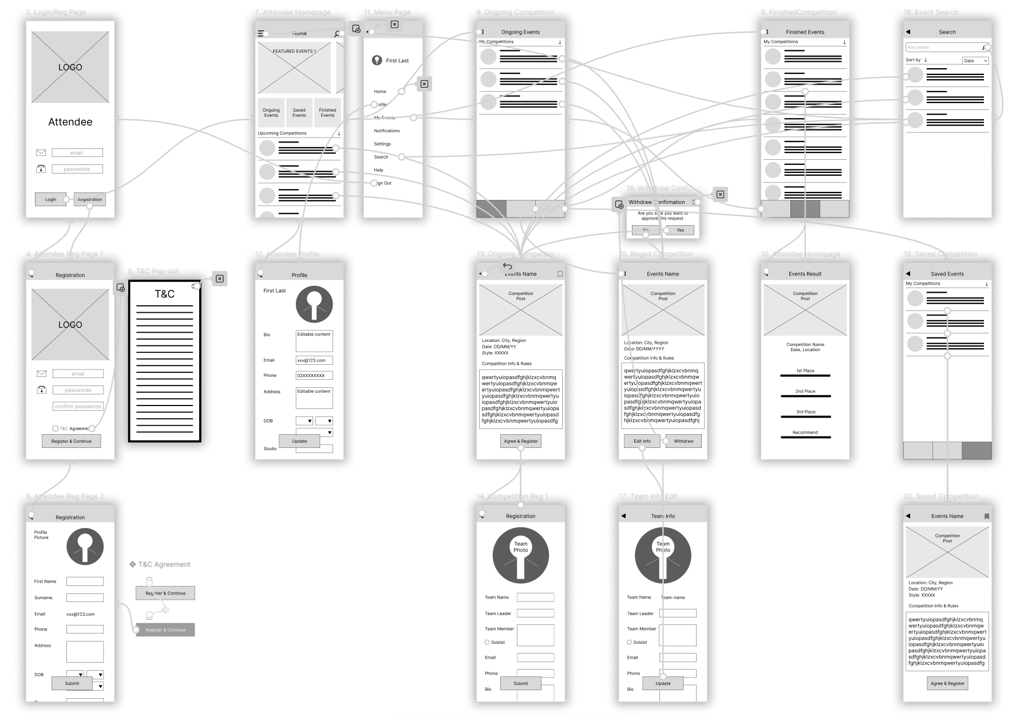
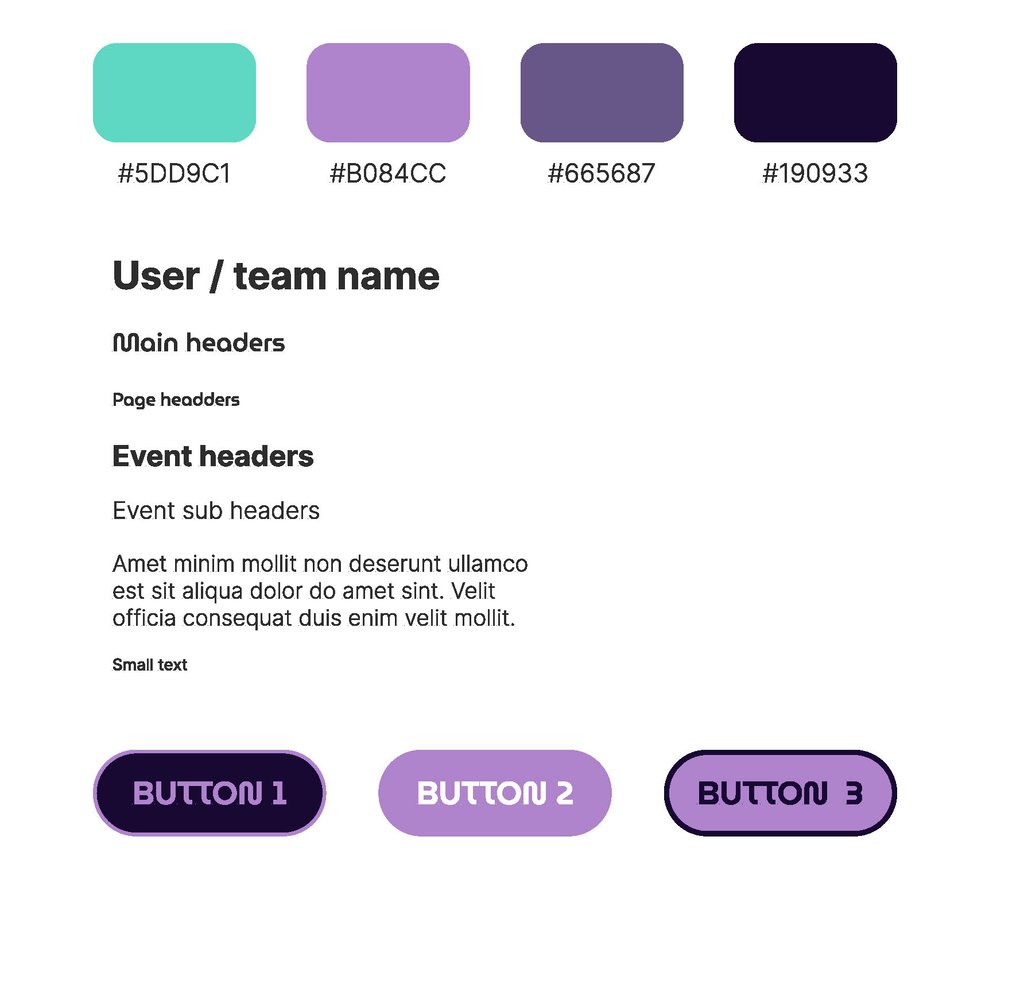
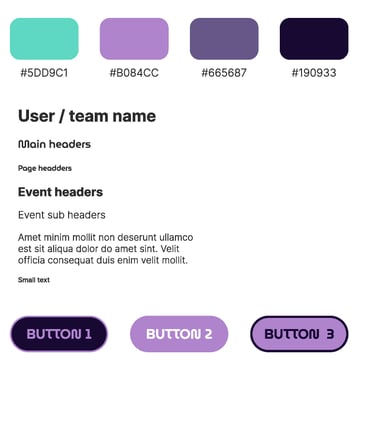
Design Styles
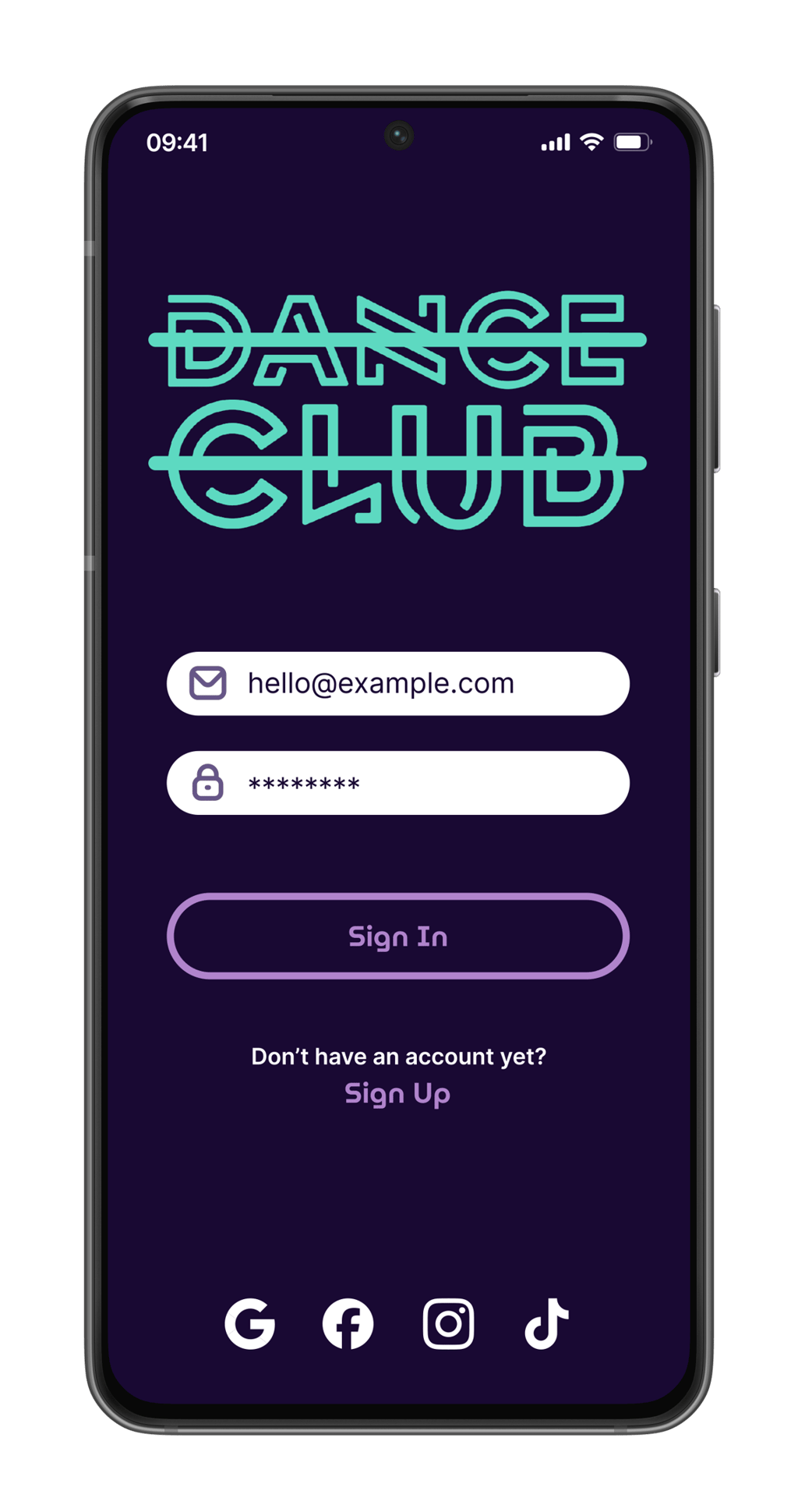
Final Outcome
Reflection
What I learned
Next Steps
User-Centric Design:
The app’s core functionality is well-aligned with user needs like event registration, schedule management, and community building. However, refining user flows for simplicity will make the platform even more appealing.
Balancing Features:
It’s important to offer robust features without overwhelming the interface, especially for users with varying tech proficiency.
Iterative Design:
Usability testing with real dancers will be crucial to identify pain points and validate the effectiveness of the current design.
Conduct Usability Testing:
Gather feedback from dancers to evaluate how intuitive the interface is and identify any bottlenecks.
Improve Visual Design:
Refine the aesthetic to better reflect the artistic and high-energy nature of dance, making the platform more engaging.
Streamline Filters and Registration:
Simplify detailed sections like filters and registration for a smoother user journey.
Enhance Real-Time Features:
Focus on implementing robust notification systems and live updates to make the app indispensable during competitions.